
Best FD Interest Rates in India 2026: Fixed Deposits (FDs) remain one of the most popular and safest investment options in India. With changing interest rate cycles, many investors are now actively comparing FD interest rates across banks to maximize returns. In 2026, the trend clearly shows that small finance banks are offering higher FD rates, while large public and private banks provide relatively lower but stable returns.
If you are planning to invest in FDs for 1 to 5 years, understanding the difference in interest rates across bank categories is essential. This guide explains the latest trends, top FD rates, and how to choose the best option based on your financial goals.
FD Interest Rates in India 2026 Overview
Here is a quick summary of key highlights:
| Parameter | Details |
|---|---|
| Investment Type | Fixed Deposit (FD) |
| Tenure Covered | 1 to 5 Years |
| Highest Rates | Up to 8%+ (Small Finance Banks) |
| Large Bank Rates | Around 6%–7% |
| Risk Level | Low |
| Best For | Safe and guaranteed returns |
Top FD Interest Rates Across Banks
FD interest rates vary depending on the type of bank. Here is a comparison of some of the best FD rates in India for 2026:
| Bank Type | Interest Rate Range (1–5 Years) |
|---|---|
| Small Finance Banks | 7.25% – 8.10% |
| Private Sector Banks | 6.25% – 7.20% |
| Public Sector Banks | 6.00% – 6.80% |
Small finance banks like Ujjivan, Jana, and Equitas are offering higher returns to attract depositors, while large banks focus on stability and trust. (Paisabazaar)
Why Small Finance Banks Offer Higher FD Rates
Small finance banks are currently leading in FD returns.
They offer higher interest rates because they aim to attract more deposits and expand their customer base. Some banks provide rates close to 7.5%–8% for 2–5 year tenures, which is significantly higher than traditional banks.
For example, certain small finance banks offer up to 7.77% for 3–5 year deposits, making them attractive for investors seeking better returns.
Also read: Central Bank of India Partners with IIFL Finance to Expand Co-Lending Loans Across India
FD Rates in Large Banks
Public and private sector banks offer comparatively lower FD rates.
For example, major private banks offer around 6.25% to 6.85% for 2–5 year tenures, depending on the duration.
While the returns are lower, these banks provide higher trust, better liquidity, and strong financial backing, making them suitable for conservative investors.
Best FD Tenures for Maximum Returns
Choosing the right tenure is important to maximize returns.
For 1-year FDs, interest rates usually range between 6.5% and 7.5% depending on the bank.
For 2–3 year FDs, rates tend to be slightly higher, often crossing 7% in many banks.
For 5-year FDs, investors can earn up to 8% or more in small finance banks, while large banks typically offer around 6%–6.5%.
Factors to Consider Before Choosing FD
While selecting the best FD rates, investors should consider multiple factors.
The interest rate is important, but safety and reliability are equally crucial. Deposits in banks are insured up to ₹5 lakh under DICGC, providing a safety net.
Liquidity is another factor. Some FDs allow premature withdrawal, but penalties may apply.
Senior citizens often receive additional interest of 0.25%–0.50%, making FDs more attractive for retirees
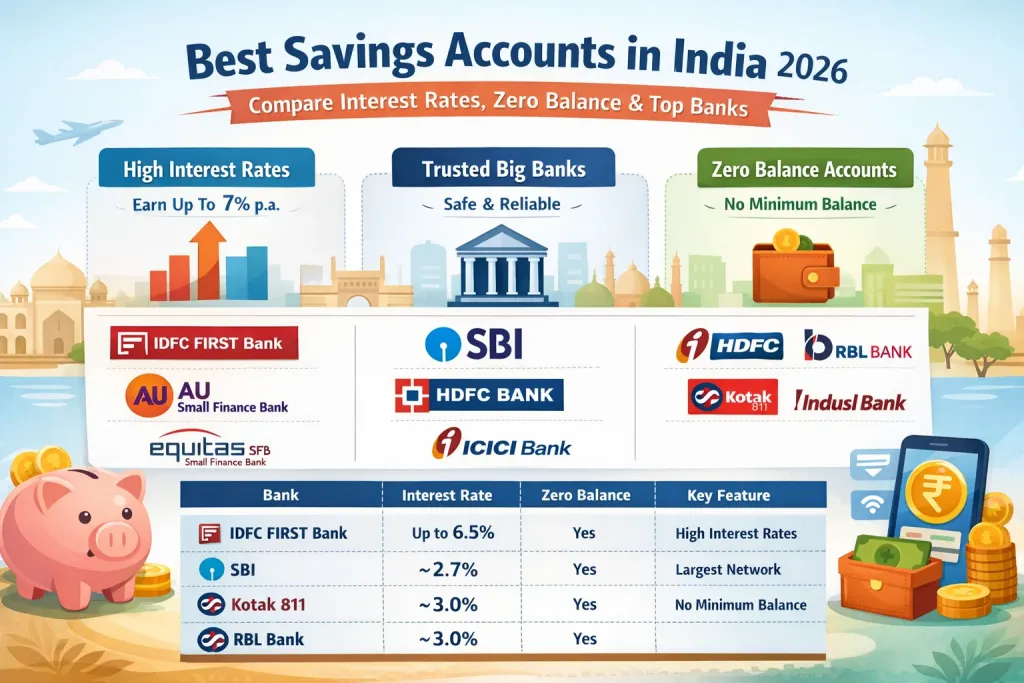
Current Trends in FD Interest Rates
Recent trends indicate that FD rates are fluctuating due to changes in RBI policies.
Some large banks have started adjusting rates, while small finance banks continue to offer higher returns to stay competitive.
This has created a clear gap between high-return small banks and stable large banks, giving investors more choices based on their risk appetite.
How to Choose the Best FD for You
Selecting the best FD depends on your financial goals.
If your priority is higher returns, small finance banks may be a better option.
If you prefer safety and brand trust, large banks are more suitable.
For balanced investment, many experts recommend diversifying across multiple banks and tenures.
Important Links
| Description | Link |
|---|---|
| FD Interest Rates Comparison | https://www.paisabazaar.com/fixed-deposit/ |
| RBI Official Website | https://www.rbi.org.in |
| Bank FD Calculator | https://www.policybazaar.com/fd-interest-rates/ |
| Small Finance Bank Rates | https://cleartax.in/s/small-finance-bank-fd-rates |
Conclusion
FD interest rates in India for 2026 vary significantly across bank categories. While small finance banks offer higher returns up to 8% or more, large banks provide lower but more secure investment options.
Choosing the best FD depends on your risk appetite, investment horizon, and financial goals. By comparing rates across 1–5 year tenures, investors can make informed decisions and maximize their returns while maintaining safety.
FAQ’s About Best FD Interest Rates in India 2026
1. Which banks offer the highest FD rates in India in 2026?
Small finance banks offer the highest rates, often ranging from 7.5% to 8% or more.
2. Are small finance bank FDs safe?
Yes, they are regulated by RBI and insured up to ₹5 lakh, but they may carry slightly higher risk compared to large banks.
3. What is the best FD tenure for high returns?
2–5 year tenures usually provide the best balance between interest rates and stability.