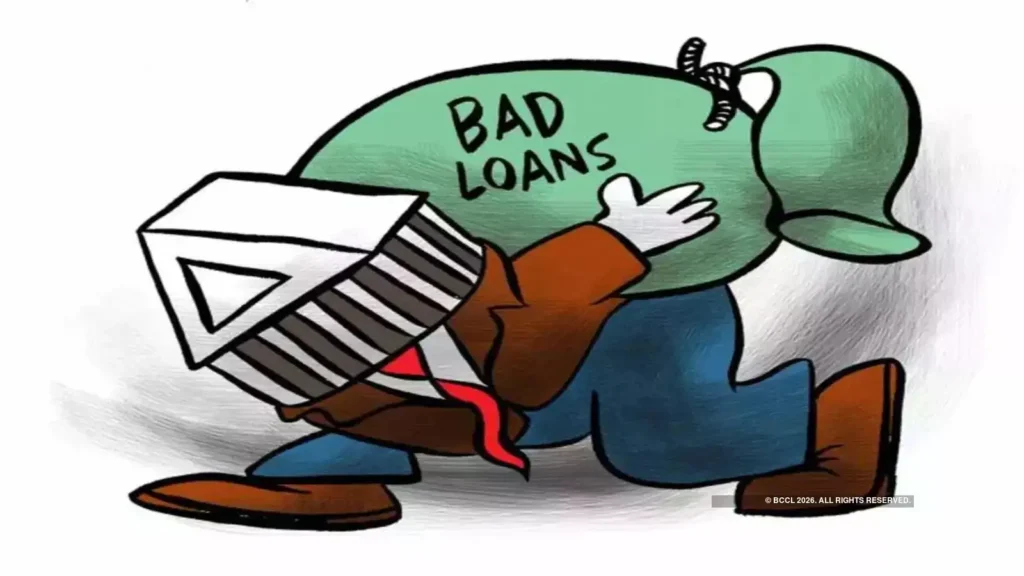
Banks Ramp Up Bad Loan Sales: Indian banks significantly accelerated the sale of bad loans to Asset Reconstruction Companies (ARCs) during the December quarter of FY2025–26, signaling a clear push to strengthen balance sheets amid rising retail stress. Industry data up to December 2025 shows that banks sold ₹24,814 crore worth of retail non-performing assets (NPAs) to ARCs — nearly three times the ₹9,093 crore sold in the September quarter.
This sharp sequential jump highlights a growing strategic shift: retail loans, once considered relatively stable compared to corporate exposures, are now emerging as a major driver of distressed asset transactions.
Retail NPAs Drive ARC Business Growth
According to Hari Hara Mishra, CEO of the Association of ARCs in India, retail loans are increasingly becoming central to the ARC ecosystem.
“Increasingly, retail is emerging as the growth driver for the ARC business. Asset pricing depends on multiple factors — including the ageing of the NPA, the value of underlying security, realisation potential and the expected recovery timeline. These dynamics ultimately determine the transaction valuation.”
The December quarter surge indicates lenders are proactively offloading stressed retail assets, including unsecured personal loans, credit card dues, and small-ticket consumer loans. This comes amid a broader industry trend of rising slippages in the retail segment.
Recovery Rates Decline Sharply in December Quarter
While the volume of retail NPAs sold rose sharply, recovery expectations declined significantly.
- Retail NPAs sold (December quarter): ₹24,814 crore
- Security Receipts (SRs) issued by ARCs: ₹3,774 crore
- Implied recovery rate: ~15%
This marks a steep drop compared to the September quarter:
- Retail NPAs sold (September quarter): ₹9,093 crore
- SRs issued: ₹3,118 crore
- Implied recovery rate: ~34%
The significant fall in recovery rates is largely attributed to:
- Higher share of unsecured loans in the December sale pool
- Inclusion of older corporate exposures
- Lower collateral backing
- Longer recovery timelines
Unsecured retail loans typically fetch lower valuations because recovery depends more on borrower repayment capacity rather than underlying assets.
Read About: Biohacking Expert Debunks 5 Myths Around Healthy Living
Why Are Recovery Rates Falling?
The December quarter sale pool contained a larger proportion of:
- Credit card defaults
- Personal loans
- Consumer durable loans
- Older stressed corporate exposures
These asset classes often lack tangible security or have already aged significantly, reducing investor appetite and valuation multiples.
In contrast, the September quarter featured a higher proportion of secured assets such as:
- Mortgage-backed retail loans
- Secured SME loans
- Asset-backed corporate exposures
Secured loans generally provide ARCs stronger recovery potential, explaining the higher implied recovery rate of over 34% in Q2.
RBI Data Signals Rising Retail Stress
The broader macro picture reinforces this trend. In its latest Trend and Progress Report, the Reserve Bank of India (RBI) highlighted a sharp increase in fresh NPAs among private sector banks during FY2024–25.
Key figures include:
- Fresh NPAs added by private banks: ₹1.21 lakh crore
- Opening gross NPA stock: ₹1.29 lakh crore
The RBI noted that the majority of fresh slippages were driven by stress in the retail segment. This indicates that while banks have largely cleaned up legacy corporate NPAs from previous credit cycles, new stress is emerging in consumer lending portfolios.
The rapid expansion of retail credit over the past few years — especially unsecured personal loans and credit card receivables — is now translating into higher delinquencies as economic conditions normalize.

Strategic Implications for Banks
The accelerated sale of retail NPAs reflects several strategic objectives:
1. Balance Sheet Cleanup
Banks aim to reduce gross NPAs and improve asset quality metrics ahead of year-end reporting cycles.
2. Capital Optimization
Selling stressed assets frees up capital and improves capital adequacy ratios.
3. Operational Efficiency
Recovering small-ticket retail loans individually is resource-intensive. Selling them in bulk to ARCs reduces collection overhead.
4. Risk Containment
Offloading older and unsecured exposures reduces future provisioning pressure.
However, lower recovery rates imply that banks may have to absorb higher haircuts, impacting short-term profitability.
Impact on the ARC Industry
For ARCs, the surge in retail loan transactions presents both opportunity and risk.
Opportunities:
- Larger deal pipeline
- Diversification beyond corporate stress
- Higher transaction volumes
Risks:
- Lower recovery visibility
- Longer resolution cycles
- Reduced valuation margins
As Mishra noted, transaction valuation depends on ageing, security coverage, and recovery expectations. With unsecured retail NPAs forming a bigger portion of the sale pool, pricing pressure is likely to persist.
Changing Nature of India’s NPA Cycle
India’s banking sector has undergone a structural transformation over the past decade:
- The 2015–2018 NPA crisis was largely corporate-driven.
- The post-pandemic cycle saw aggressive retail credit growth.
- The current trend shows retail stress gradually replacing corporate stress as the dominant NPA source.
This transition changes recovery dynamics. Corporate NPAs often involve large-ticket assets with restructuring or insolvency resolution potential. Retail NPAs, by contrast, are fragmented and operationally intensive.
Also read: Best Finance Sector Stocks to Buy in 2026: Investor Guide
Outlook for FY2026
Going forward, analysts expect:
- Continued bulk sales of retail NPAs to ARCs
- Moderation in recovery rates for unsecured portfolios
- Increased regulatory monitoring of retail credit growth
- Greater focus on underwriting discipline
If retail slippages continue rising, ARC transaction volumes could remain elevated through FY2026. However, sustained low recovery rates may force banks to reassess pricing strategies and credit standards.
Conclusion
The December quarter surge in retail NPA sales — reaching ₹24,814 crore — marks a significant shift in India’s stressed asset landscape. While banks are actively cleaning up balance sheets, declining recovery rates highlight the growing dominance of unsecured retail stress.
The development signals a new phase in India’s credit cycle — one where retail lending, once considered low-risk and high-growth, now demands greater vigilance from banks, regulators, and distressed asset buyers alike.