
Claude Cowork: Anthropic is accelerating its enterprise ambitions by expanding Claude Cowork with a new set of AI agent workflows purpose-built for the financial services industry. This move marks a clear strategic evolution—from offering broadly capable AI assistants to positioning Claude Cowork as an embedded, operational intelligence layer inside some of the world’s most demanding financial organizations.
The expansion targets investment banks, private equity firms, asset managers, and wealth management institutions—sectors where decision-making is data-heavy, time-sensitive, and deeply document-driven. By automating high-effort analytical tasks, Anthropic aims to reshape how financial professionals work, collaborate, and compete.
From General AI to Finance-Specific Intelligence
Until recently, most enterprise AI tools focused on generalized productivity: drafting emails, summarizing documents, or answering questions. With this update, Claude Cowork takes a more specialized approach. It introduces finance-focused AI agents designed to handle workflows that traditionally require large analyst teams and long working hours.
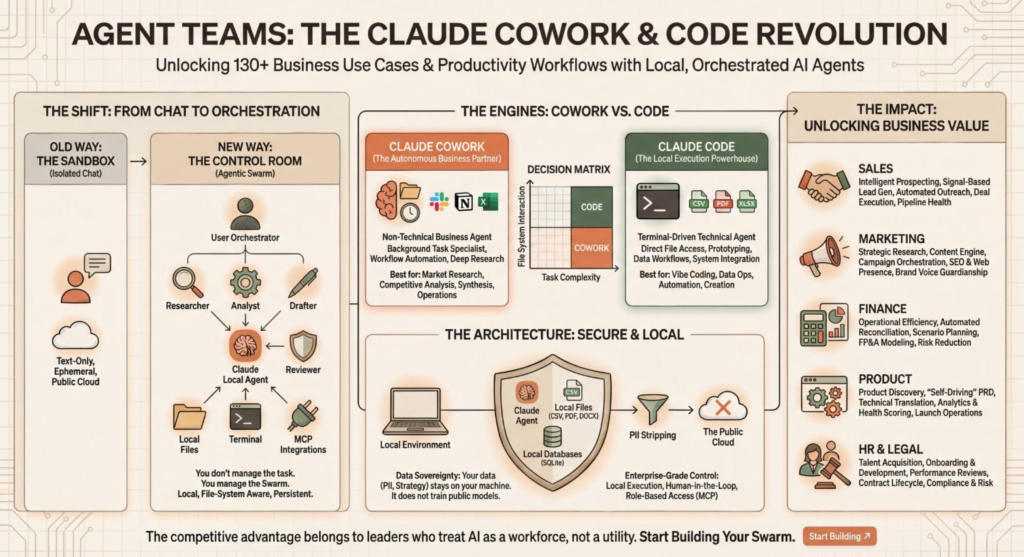
Instead of acting as a standalone chatbot, Claude Cowork now functions as a workflow orchestrator. It can understand context across documents, spreadsheets, emails, and databases—then coordinate tasks end to end. This shift reflects Anthropic’s broader vision of agentic AI: systems that do not just respond, but actively execute complex, multi-step work.
Also raed: EdCIL Recruitment 2026: यंग प्रोफेशनल के 7 पदों पर भर्ती, ₹70,000 मासिक वेतन
Investment Banking: Faster Deal Preparation
In investment banking, speed and accuracy are critical. Claude Cowork’s new capabilities can assist bankers throughout the deal lifecycle. The platform helps generate pitch decks by pulling relevant company data, market trends, and prior transaction insights into structured presentations. It can also perform comparable company analysis by reviewing financial statements, valuation multiples, and industry benchmarks.
Another major use case is transaction documentation. AI agents can review draft term sheets, information memorandums, and due diligence materials, highlighting inconsistencies, missing data, or potential risks. This reduces manual review time and allows senior bankers to focus on strategy and client relationships rather than repetitive analysis.
Equity Research and Private Equity Use Cases
For equity research teams, Claude Cowork can analyze earnings call transcripts, extract key management commentary, and flag deviations from previous guidance. It can then update financial models or summarize implications for investment theses. This enables analysts to react more quickly to market-moving information.
In private equity, where diligence speed can determine deal success, the platform supports opportunity evaluation by comparing potential investments against internal criteria. Claude Cowork can scan historical deal data, performance metrics, and sector trends to identify alignment—or red flags—early in the process. This helps firms prioritize the most promising opportunities while reducing research bottlenecks.
Wealth Management and Portfolio Oversight
Wealth management firms also stand to benefit significantly. Claude Cowork can continuously monitor client portfolios for drift from target allocations, assess tax exposure, and generate rebalancing recommendations. Instead of periodic, manual portfolio reviews, advisors gain near real-time insights powered by AI agents.
This automation enhances personalization at scale. Advisors can spend more time with clients discussing goals and strategies, while routine monitoring and calculations are handled in the background by intelligent workflows.
Deep Integration With Enterprise Tools
A key differentiator in Anthropic’s approach is integration rather than replacement. Claude Cowork is designed to work seamlessly within existing enterprise ecosystems. It integrates with widely used tools such as Google Drive, Gmail, DocuSign, and FactSet.
By operating inside familiar environments, Claude Cowork lowers adoption friction. Financial professionals do not need to abandon trusted software or retrain extensively. Instead, AI agents enhance existing workflows—retrieving documents, analyzing data, drafting outputs, and coordinating tasks across platforms.
Strategic Implications for Financial Institutions
The implications of this expansion are significant. Financial services have long relied on manpower-intensive research models as a competitive advantage. AI agent workflows challenge that assumption. If analysis can be completed faster, cheaper, and with comparable accuracy, firms that embrace automation may gain a decisive edge.
At the same time, this shift raises strategic questions. As AI accelerates decision-making, differentiation may increasingly depend on judgment, relationships, and proprietary insights rather than raw analytical capacity. Institutions that successfully combine human expertise with agentic AI could outperform peers still dependent on traditional processes.
A Glimpse Into the Future of Enterprise AI
Anthropic’s expansion of Claude Cowork into finance reflects a broader industry trend: enterprise AI is moving beyond assistance toward execution. Instead of simply answering questions, AI agents are beginning to plan, coordinate, and act across complex systems.
For financial institutions operating in an increasingly data-driven and competitive landscape, this evolution could redefine productivity standards. Claude Cowork’s finance-focused workflows suggest a future where AI becomes not just a tool, but a core operational partner—quietly embedded in daily work, yet transformative in impact.