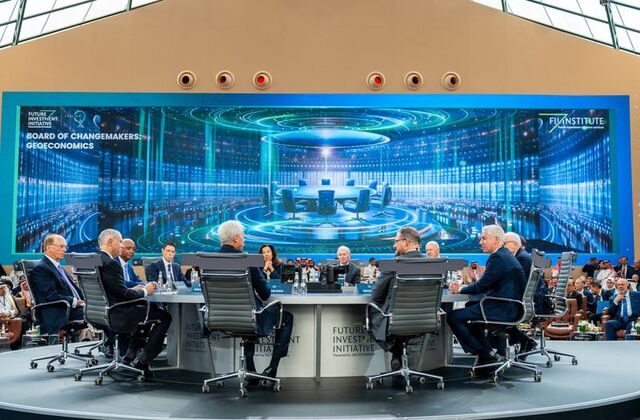
US to Remain: The United States is set to continue attracting the bulk of global investment flows, according to top finance executives speaking at the Future Investment Initiative (FII) conference in Riyadh, Saudi Arabia. Despite concerns over government debt, trade tariffs, and the potential for a market correction, leading asset managers and financiers emphasized that the risks of an economic slowdown in the U.S. are overblown.
Executives highlighted that U.S. stock markets are reaching record highs, largely fueled by investor bets on artificial intelligence (AI) and technology sectors. While some market watchers have warned about the potential for a bubble, the overall sentiment among major global investors remains bullish on the U.S. economy.
Speaking at the conference, Larry Fink, CEO of BlackRock—the world’s largest asset manager—said that funds had recently returned to U.S. markets, reversing earlier moves out of dollar-based assets. “Most global investors have a very large overweight in the U.S., and that’s the place to have your overweight for the next 18 months,” Fink stated, highlighting sustained investor confidence.
Strong Investor Preference for Dollar-Based Assets
David Solomon, CEO of Goldman Sachs, emphasized that the vast majority of global capital allocations would continue to be directed toward dollar-based assets. According to Solomon, there is no clear catalyst for a U.S. economic slowdown over the next 6–12 months, further reinforcing the country’s position as the most attractive investment destination globally.
Read about: Xin Ge: Finance as the Strategic Spine of China’s 15th Five-Year Plan
Trade and Debt Concerns Addressed
While concerns have been raised about U.S. government debt and trade tariffs under President Donald Trump, executives at FII downplayed these risks:
- Stephen Schwarzman, CEO of Blackstone, expressed optimism that the U.S. and China would make progress on a trade deal, following upcoming talks between President Trump and the Chinese Premier.
- Bill Ackman, founder of Pershing Square Capital Management, highlighted the government’s strong asset base, noting that market focus on liabilities was overemphasized relative to the scale of assets.

Why the U.S. Remains Attractive
Several factors were cited for the continued attractiveness of U.S. investments:
- Innovation Leadership: AI, technology, and other high-growth sectors continue to draw global capital.
- Market Stability: Despite high valuations, the U.S. market offers liquidity and depth unmatched by other regions.
- Policy Optimism: Executives expect ongoing progress in trade negotiations and government support for business investment.
- Global Investor Confidence: Large institutional investors maintain significant exposure to dollar-denominated assets as a safe and profitable strategy.
Conclusion
Finance leaders at the FII conference are united in their view that the United States will remain the primary hub for global investment flows. While risks such as high debt levels and trade uncertainties exist, the overall sentiment is that these are manageable and overshadowed by the U.S.’s market depth, innovation edge, and investor confidence.
With AI and technology driving much of the current market rally, and major investors continuing to favor dollar-based assets, the U.S. is expected to dominate global investment trends in the coming 12–18 months. Investor focus will remain on balancing risk with opportunities in one of the world’s most robust and liquid markets.
Also read: ACR 2025: GLP-1 Drugs Reduce Rheumatoid Arthritis Flares
FAQs of US to Remain
1. Why is the U.S. attracting most global investment flows?
The U.S. attracts investment due to its liquid stock markets, technological innovation, strong corporate earnings, and investor-friendly regulations. AI and tech sectors have further amplified interest, making the U.S. a top choice for both institutional and retail investors.
2. Are concerns about a market bubble justified?
Some analysts have warned that U.S. stock markets could face corrections due to high valuations. However, executives like Larry Fink and David Solomon argue that long-term fundamentals, investor confidence, and economic resilience mitigate the immediate risk of a bubble.
3. How does U.S. government debt affect investment?
While the U.S. government carries substantial debt, investors focus on the scale of assets and economic strength. Experts like Bill Ackman highlight that the government’s assets outweigh liabilities, making debt a manageable concern for investors.
4. What role does trade policy play in investment decisions?
Trade relations, especially between the U.S. and China, influence market sentiment. Optimism about trade deals, as expressed by executives like Stephen Schwarzman, supports continued investment into U.S. assets despite tariff concerns.
5. What sectors are driving U.S. market growth?
The technology sector, particularly AI, software, and semiconductor industries, is leading market growth. Innovation-focused sectors continue to attract global capital, reinforcing the U.S.’s position as a preferred investment destination.

Pingback: Numerology Horoscope: October 31, 2025 – Money, Investments, and Financial Clarity – Texas Headliners
Когда сталкиваешься с утратой близкого человека, важно найти надежную [url=https://ritual-stal.ru/]ритуальная служба минск[/url], которая поможет организовать достойное прощание.
Он требует внимательного подхода и рассмотрения большого числа аспектов. В белорусской столице работает немало организаций, предлагающих ритуальные услуги, однако выбор проверенного исполнителя – может быть непростым делом.
Необходимо знать, что стоимость ритуальных услуг подвержена колебаниям. Влияют на ценообразование выбранные ритуальные принадлежности, транспортные расходы и прочие факторы. В связи с этим советуем заранее уточнить все детали и запросить детальный расчет.
Выбор ритуального агентства: на что обратить внимание
Выбирая похоронное бюро важно обратить внимание на репутацию компании. Изучите отзывы в интернете, пообщайтесь с сотрудниками, чтобы составить собственное впечатление. Наличие лицензии и сертификатов также играет существенную роль.
Убедитесь, что агентство оказывает все виды сервиса, в том числе подготовку необходимых бумаг. Автомобили в собственности и специального зала для отпевания – важные факторы.
Оформление документов и организация церемонии
Завершение формальностей – важная составляющая организации похорон. Ритуальное агентство. хлопоты и заботы.
Устройство похоронной процессии – важный этап, дающий возможность почтить память умершего. Решение о выборе кладбища и близких и родных.
Дополнительные услуги и поддержка
Кроме стандартного набора ритуальные агентства часто предлагают дополнительные услуги, в частности, проведение поминальной трапезы. Консультации психолога также в трудный период.
Следует знать, что проведение погребения – требует индивидуального подхода. Отдавайте предпочтение агентстве, наиболее широкий перечень услуг и окажет необходимую поддержку.
**Спин-шаблон:**
“`
Необходимо проявить особое внимание и рассмотрения большого числа аспектов. В белорусской столице работает немало организаций, предлагающих ритуальные услуги, но выбор надежного партнера – может оказаться сложной задачей.
Следует учитывать, что стоимость ритуальных услуг зависит от многих факторов. Определяют стоимость выбранные ритуальные принадлежности, затраты на перевозку и иные параметры. Исходя из этого, целесообразно заранее уточнить все детали и ознакомиться с полным прайс-листом.
Как выбрать ритуальное агентство: важные критерии важно обратить внимание на репутацию компании. Просмотрите комментарии клиентов, поговорите с представителями, чтобы сформировать личное мнение. Наличие лицензии и сертификатов также имеет немаловажное значение.
Удостоверьтесь, что агентство предлагает комплексное обслуживание, в том числе подготовку необходимых бумаг. Автомобили в собственности и помещения для проведения церемонии – несомненные плюсы.
Документальное оформление и проведение похорон – важная составляющая организации похорон. сбор всех необходимых справок. хлопоты и заботы.
Организация церемонии прощания – важный этап, помогающий попрощаться с близким человеком. Решение о выборе кладбища и членов семьи и друзей.
Кроме стандартного набора ритуальные агентства часто предлагают дополнительные услуги, в частности, проведение поминальной трапезы. Психологическая поддержка также может оказаться необходимой.
Необходимо учитывать, что организация похорон – является делом личным. Выбирайте агентстве, наиболее подходящий спектр услуг и окажет необходимую поддержку.
“`
В случае необходимости организовать похороны или другие ритуальные мероприятия в белорусской столице, многие граждане обращаются к [url=https://ritual-agency72.ru/]ритуальные услуги минск[/url], которая предлагает широкий спектр услуг, связанных с организацией похорон и другой ритуальной деятельности.
В Минске существует множество организаций, которые занимаются ритуальными услугами и предоставляют всестороннюю поддержку в организации похорон . Они предлагают услуги по организации похорон, включая транспортировку усопшего, услуги ритуальных залов и подготовку к траурной церемонии . Кроме того, многие из этих компаний предлагают консультационные услуги, чтобы помочь семьям справиться с потерей .
https://newmount.net/?URL=ritual-agency72.ru
http://www.google.je/url?q=http://ritual-agency72.ru
http://www.google.iq/url?q=http://ritual-agency72.ru
https://google.ba/url?q=http://ritual-agency72.ru
https://www.google.ee/url?q=https://ritual-agency72.ru
Ритуальные услуги могут включать в себя подготовку усопшего к похоронам, а также организацию поминальных мероприятий. Ритуальные услуги в Минске могут быть проведены в соответствии с различными религиозными и культурными традициями .
## Ритуальные услуги в Минске: Виды услуг
Компании, оказывающие ритуальные услуги в Минске, предлагают широкий спектр услуг, чтобы удовлетворить потребности семей. Некоторые компании специализируются на конкретных видах ритуальных услуг, таких как кремация или захоронение . Компании, предлагающие ритуальные услуги, часто работают в тесном сотрудничестве с похоронными бюро, чтобы обеспечить всестороннюю поддержку семьям.
Ритуальные услуги в Минске достаточно разнообразны, чтобы удовлетворить потребности семей из разных культур и конфессий . Компании, предлагающие ритуальные услуги, стремятся создать индивидуальный подход к каждой семье, потерявшей близких.
## Ритуальные услуги в Минске: Организация похорон
Ритуальные услуги в Минске могут включать в себя подготовку к похоронам, организацию траурных церемоний и предоставление ритуальных принадлежностей . Компании, оказывающие ритуальные услуги, часто работают в тесном сотрудничестве с похоронными бюро и другими организациями, чтобы обеспечить гладкий процесс организации похорон. Ритуальные услуги в Минске могут быть адаптированы под конкретные потребности и традиции семей, что позволяет создать индивидуальный подход к каждой семье .
Организация похорон в Минске может быть достаточно сложным процессом, но с помощью профессиональных компаний, предоставляющих ритуальные услуги, этот процесс может быть облегчен . Некоторые компании специализируются на конкретных видах ритуальных услуг, таких как кремация или захоронение . Кроме того, некоторые компании предлагают дополнительные услуги, такие как организация поминальных мероприятий или подготовка необходимых документов .
## Ритуальные услуги в Минске: Заключение
Ритуальные услуги включают в себя подготовку к похоронам, организацию траурных церемоний и предоставление ритуальных принадлежностей . Компании, оказывающие ритуальные услуги, часто работают в тесном сотрудничестве с похоронными бюро и другими организациями, чтобы обеспечить гладкий процесс организации похорон. Ритуальные услуги могут включать в себя подготовку усопшего к похоронам, а также организацию поминальных мероприятий.
В Минске можно найти компании, предлагающие как традиционные, так и современные ритуальные услуги . Компании, предлагающие ритуальные услуги, стремятся создать индивидуальный подход к каждой семье, потерявшей близких.
В случае необходимости организовать похороны или другие ритуальные мероприятия в белорусской столице, многие граждане обращаются к [url=https://ritual-agency72.ru/]городская ритуальная служба минск[/url], которая предлагает широкий спектр услуг, связанных с организацией похорон и другой ритуальной деятельности.
Ритуальные услуги в Минске представлены широким спектром компаний, предлагающих различные виды похоронных услуг . Предоставление ритуальных услуг в Минске включает в себя широкий спектр деятельности, направленной на организацию достойных похорон. Кроме того, многие из этих компаний предлагают консультационные услуги, чтобы помочь семьям справиться с потерей .
http://www.google.mw/url?q=http://ritual-agency72.ru
http://www.google.gg/url?q=http://ritual-agency72.ru
http://maps.google.je/url?q=http://ritual-agency72.ru
http://tootoo.to/op/?redirect=ritual-agency72.ru
https://google.co.zm/url?q=http://ritual-agency72.ru
В Минске можно найти компании, предлагающие как традиционные, так и современные ритуальные услуги . Многие из этих компаний имеют опыт работы с семьями из разных культур и конфессий, что позволяет им предоставлять персонализированные услуги .
## Ритуальные услуги в Минске: Виды услуг
Виды ритуальных услуг в Минске включают в себя приготовление к похоронам, организацию траурных церемоний и предоставление ритуальных принадлежностей . Ритуальные услуги в Минске могут быть разделены на традиционные и современные, в зависимости от пожеланий семей . Кроме того, некоторые компании предлагают дополнительные услуги, такие как организация поминальных мероприятий или подготовка необходимых документов .
Ритуальные услуги в Минске достаточно разнообразны, чтобы удовлетворить потребности семей из разных культур и конфессий . Компании, предлагающие ритуальные услуги, стремятся создать индивидуальный подход к каждой семье, потерявшей близких.
## Ритуальные услуги в Минске: Организация похорон
Организация похорон в Минске включает в себя множество деталей, которые необходимо учитывать, чтобы обеспечить достойные и уважительные похороны . Ритуальные услуги в Минске также включают в себя психологическую поддержку семьям, потерявшим близких . Ритуальные услуги в Минске могут быть адаптированы под конкретные потребности и традиции семей, что позволяет создать индивидуальный подход к каждой семье .
Компании, оказывающие ритуальные услуги в Минске, предлагают широкий спектр услуг, чтобы удовлетворить потребности семей. Некоторые компании специализируются на конкретных видах ритуальных услуг, таких как кремация или захоронение . Ритуальные услуги в Минске могут быть дополнены услугами по созданию памятников или организации траурных церемоний .
## Ритуальные услуги в Минске: Заключение
Ритуальные услуги в Минске представляют собой важную часть организации похорон и прощания с усопшим . Компании, оказывающие ритуальные услуги, часто работают в тесном сотрудничестве с похоронными бюро и другими организациями, чтобы обеспечить гладкий процесс организации похорон. В Минске можно найти компании, предлагающие как традиционные, так и современные ритуальные услуги .
Ритуальные услуги могут включать в себя подготовку усопшего к похоронам, а также организацию поминальных мероприятий. Компании, предлагающие ритуальные услуги, стремятся создать индивидуальный подход к каждой семье, потерявшей близких.